

This review is spoiler-free, discussing the series’ premise, characters and themes without revealing major plot developments.
Some anime become interesting partly because of the attention surrounding them. “Black Torch” was one of those series for me. Between its convention promotion and the repeated visibility I encountered on Crunchyroll’s homepage, it began to feel like a show I was continually being encouraged to treat as an event. The campaign caught my attention, kudos to the marketing team. However, the anime struggled to hold it.
That difference became more interesting than the series itself. “Black Torch” has a premise that is easy to communicate and plenty of material for an exciting trailer. Watching it unfold, however, I found a story more effective at introducing possibilities than developing the relationships that would make those possibilities matter.
The promotional presence had a substantial convention component. VIZ Media announced the adaptation at Emerald City Comic Con in 2025, and VIZ Media and Crunchyroll later hosted its first-episode world premiere at Anime Expo in 2026. Those appearances gave the series a visible place in major fan gatherings well before audiences could judge the completed adaptation.
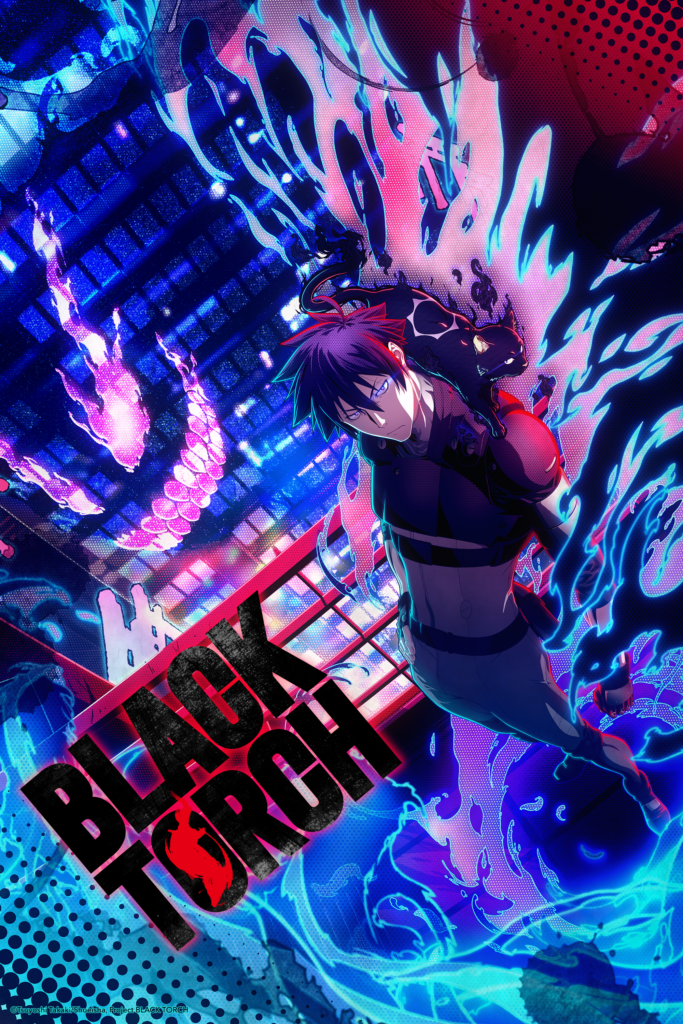
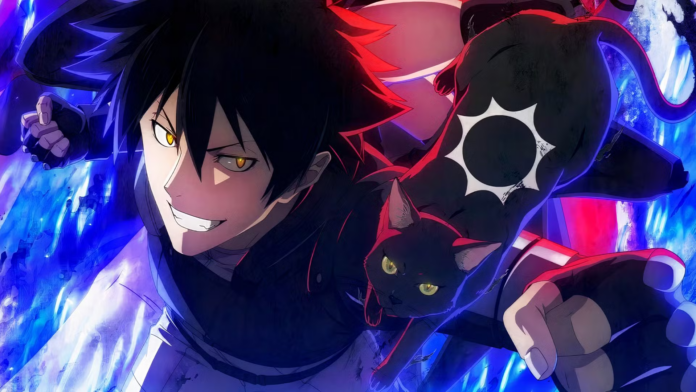
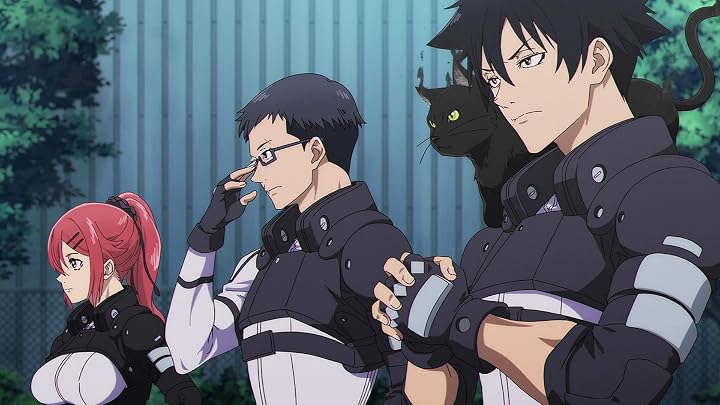
Produced by 100studio and directed by Kei Umabiki, the anime adapts Tsuyoshi Takaki’s manga. Its protagonist, Jiro Azuma, comes from a ninja lineage and can communicate with animals. Rescuing an injured black cat named Rago draws him into a conflict involving mononoke, supernatural spirits with their own interests in the human world. Their eventual fusion makes Jiro a figure of interest to the Bureau of Espionage.
There is an appealing foundation here. Jiro’s concern for animals gives his involvement a personal motivation before the larger conflict takes over. His connection to Rago begins with an act of care, which offers the story something more emotionally specific than a teenager simply acquiring extraordinary power.
Rago also gives the series some welcome personality. His abrasive temperament creates friction with Jiro, and their shared circumstances provide opportunities for humor, negotiation and reluctant cooperation. The relationship has the potential to make the supernatural premise feel intimate: two individuals with different priorities suddenly have to live with the consequences of the same decisions.
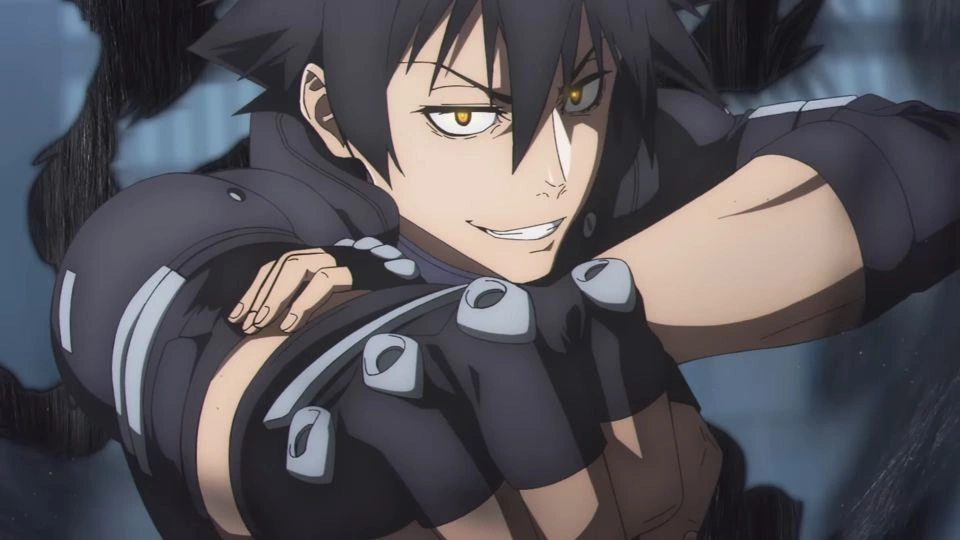
My frustration was how often that potential gave way to explanation. The series spends considerable time establishing its supernatural rules, organizational interests and character histories. Information accumulates quickly, but knowing more about the setting did not consistently make me more involved in what was happening inside it.
The problem is the placement and volume of that information. Dialogue and backstory repeatedly compete with the momentum of the action. At points when the conflict should be developing through decisions and consequences, the storytelling pauses to supply more context. That rhythm made the world feel crowded while leaving its emotional development comparatively thin.
The supporting cast experiences a similar problem. Ichika and Reiji bring competing attitudes and personal motivations to the team, giving their interactions with Jiro a useful basis for conflict. Their distrust creates opportunities for relationships to develop through shared work. Too often, though, the series explains what is behind those attitudes before giving the characters enough space to work through them together.
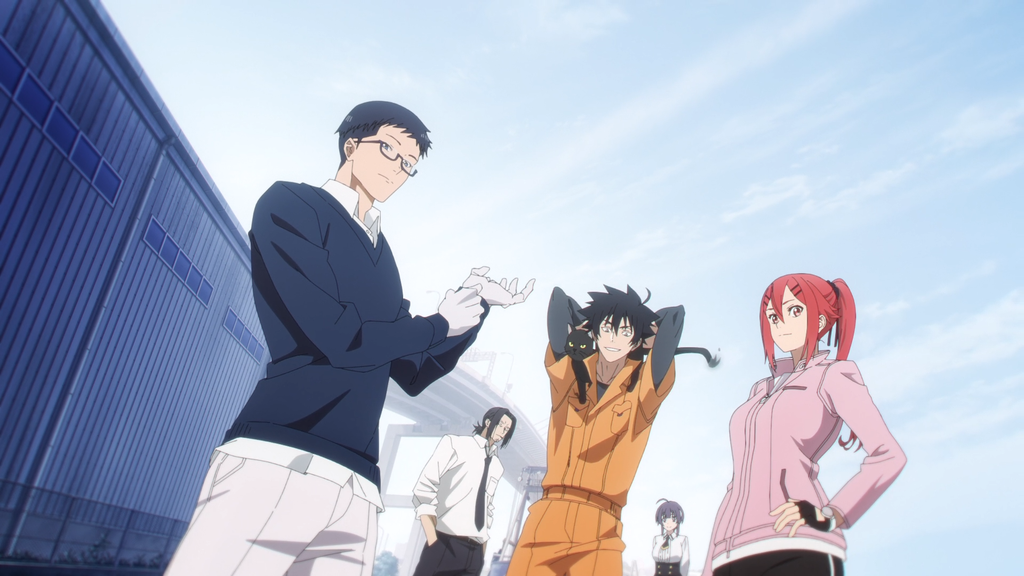
That distinction matters in a story built around cooperation. Understanding a character’s history provides context, but the attachment comes from seeing how that history affects choices over time. “Black Torch” frequently supplies the first part more readily than the second. I understood why its characters might clash without always feeling that their changing relationships had acquired enough weight.
The more direct action passages show what the series can accomplish when those elements come together. Jiro and Rago’s partnership becomes easier to invest in when their decisions have immediate consequences and the team’s abilities contribute to a shared objective. Those moments give the characters purpose within the conflict. They also make the interruptions elsewhere more noticeable.
Familiarity alone would be an unfair reason to dismiss the premise. Takaki created “Black Torch” in 2016, before the publication of “Chainsaw Man” and “Jujutsu Kaisen.” Similarities to those later titles do not establish imitation. Still, an anime arriving in 2026 meets an audience already familiar with supernatural powers, uneasy partnerships and organizations that recruit unusually gifted protagonists. Its execution has to give that framework a compelling identity.
Explaining why the marketing push is worth examining. The premise communicates its appeal quickly: ninjas, supernatural conflict and a powerful cat whose relationship with the protagonist can support both combat and comedy. My reading is that those features make it particularly easy to present through trailers, convention programming and promotional artwork.
The consistent homepage exposure I noticed encouraged me to expect something that would justify returning to it week after week. That is an expectation created through visibility, and the show’s storytelling still has to earn the investment that follows.
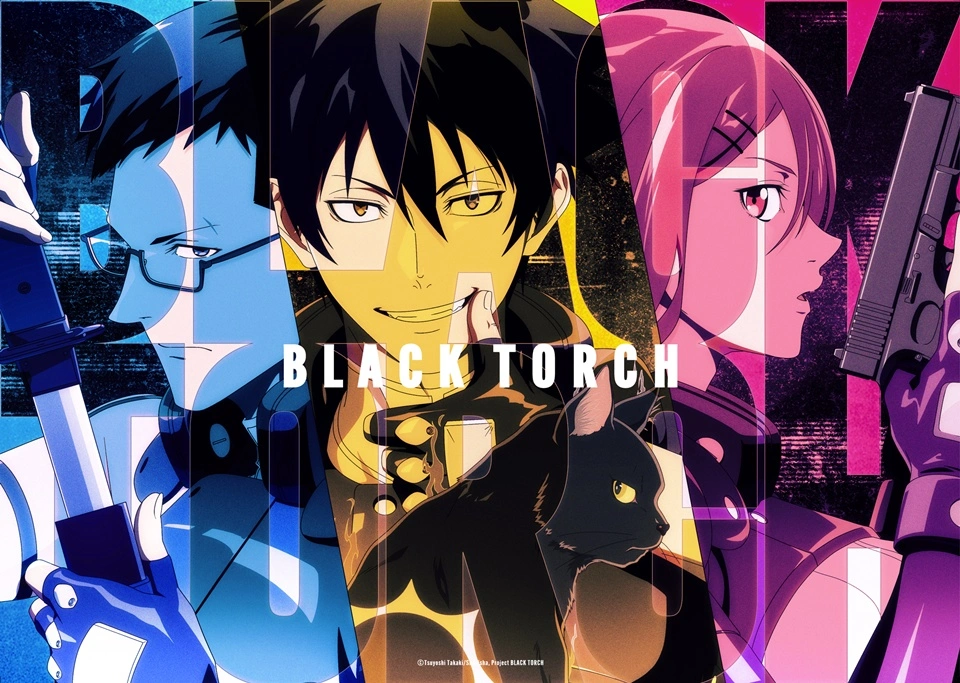
There is a reasonable purpose behind promoting a title to help it find an audience. An adaptation of an older manga can benefit from that introduction. The difficulty arises when the prominence of the campaign becomes the most persuasive thing about the viewing experience. In my case, the reminders sustained awareness of “Black Torch” more successfully than the episodes sustained curiosity about its characters.
The huge promotional push did not determine my disappointment. The premise deserved a chance, and Jiro’s compassion and Rago’s personality gave me reasons to hope it would develop into something engaging. The crowded exposition and limited room for its relationships ultimately made the experience less rewarding than those early possibilities suggested. “Black Torch” has enough appealing ideas to explain why it could gain a cult following. What it lacked for me was the patient development needed to turn those ideas into a series I cared about.
Black Torch is currently streaming on Crunchyroll.
————
AnimeTV チェーン bringing you the latest anime news direct from Japan ~ anytime! — Your new source of information!