

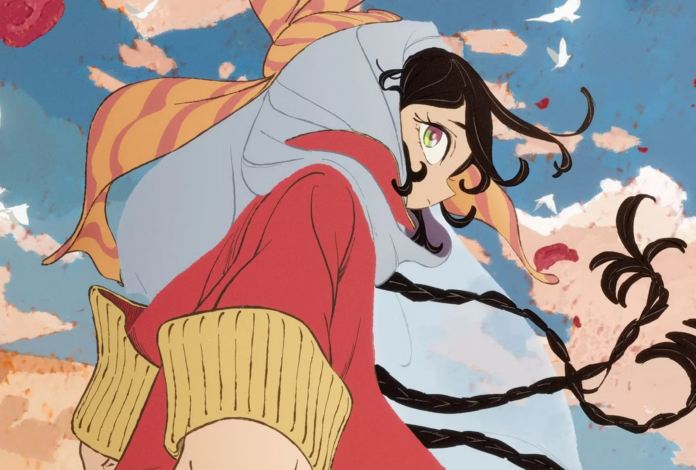
This review is spoiler-free, discussing the series’ premise, characters and themes without revealing major plot developments.
Science SARU’s expressive historical drama follows a young woman through conquest, captivity and the politics of survival.
I first encountered “Jaadugar: A Witch in Mongolia” at its Anime Expo booth. I knew little about the series, but I left intrigued. Watching it turned that curiosity into admiration for a historical drama with a distinctive visual identity and a serious interest in the people forced to endure war.
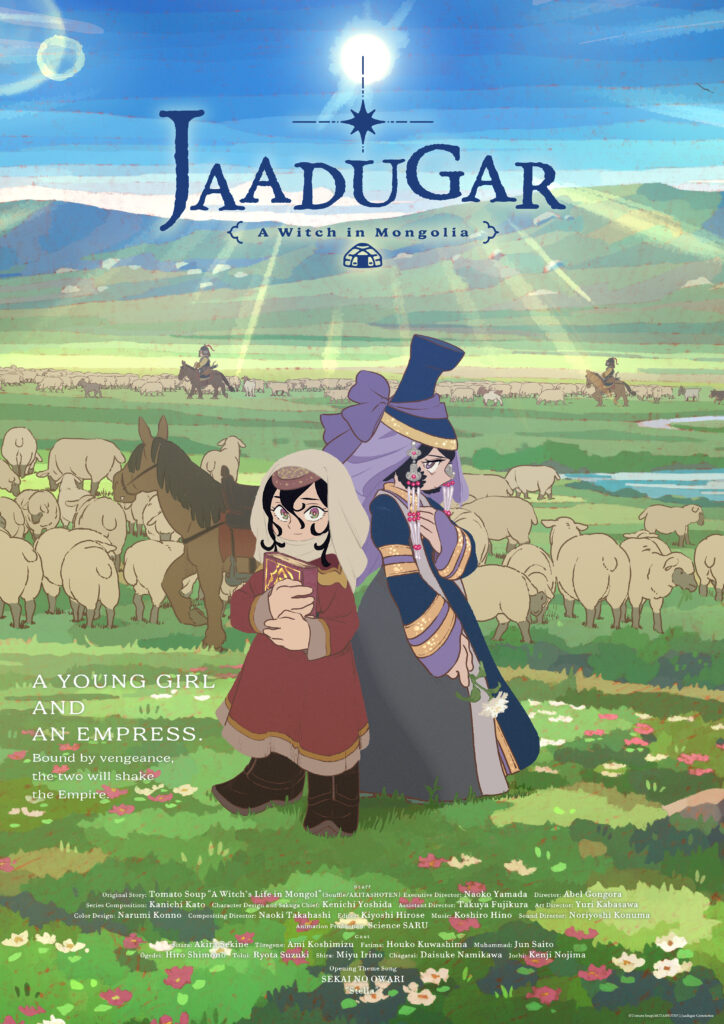
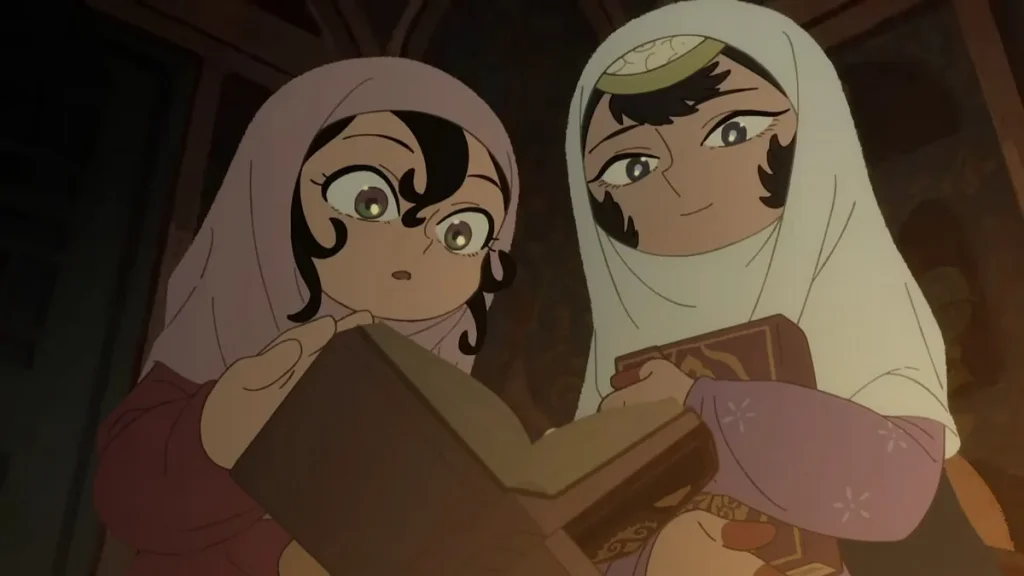
Based on Tomato Soup’s manga “A Witch’s Life in Mongol,” the Science SARU adaptation is directed by Abel Gongora, with Naoko Yamada serving as executive director. It opens in 1213 in Tus, in present-day Iran, where Sitara, an orphaned girl sold into slavery, enters the household of Fatima, a woman from a scholarly family. Fatima’s son, Muhammad, helps her recognize the possibilities an education can offer.
That education becomes essential when a Mongol invasion upends her life. Taken captive, Sitara must navigate an unfamiliar society in which her knowledge may offer some influence, even as others control her circumstances. The story grows from a girl discovering an interest in learning into a tense examination of how someone survives when her choices are severely restricted.
The animation was the first thing I loved. Rounded faces, spare linework and expressive movement give the characters an approachable quality while allowing their personalities to remain distinct. Sitara’s curiosity is especially engaging because the animation makes the act of discovering something feel exciting.
There is a freshness to that approach. The characters can be funny, stubborn or visibly delighted without disrupting the seriousness of the drama. Their expressiveness makes them easy to connect with, and the visual style remains effective when the story becomes frightening. Fear has somewhere to register because these faces already communicate so much.
The early household scenes also establish something worth losing. The series gives relationships and familiar routines time to become meaningful. When violence disrupts them, the damage carries an emotional weight that spectacle alone could not provide. A place we have come to understand as someone’s home becomes a place where safety can no longer be assumed.

As a veteran, I found that attention to the civilian consequences of war particularly compelling. “Jaadugar” understands that devastation continues after an attack ends. Displacement changes who can offer protection, which relationships remain possible and how much control someone has over the next day. The threat reaches into ordinary decisions that have suddenly become dangerous.
That focus kept the violence from feeling like an isolated dramatic event. The series remains interested in the lives it changes. Sitara’s grief and anger carry forward into her relationships, her judgment and the compromises survival requires. There is room to admire her determination while recognizing how profoundly her circumstances have narrowed.
The Persian and Muslim setting was another major part of the appeal. This is a perspective I do not often encounter in anime, and I appreciated being invited into it through the characters’ daily lives. Prayer, family relationships and study help establish a community with concerns beyond the conflict that eventually reaches it.

Lessons in the Quran belong to that educational environment, giving religious practice a place in Sitara’s upbringing. The attention to learning also makes scholarship feel like an active part of the story. Books and ideas matter because people care about them, debate them and use them to make sense of their circumstances. The setting offers more than an overall attractive backdrop.
The household’s kindness does not erase Sitara’s enslavement, either. Affection and unequal power exist together, making those early relationships more complicated than they first appear. That tension gives her education significance without pretending it immediately grants her freedom.
Sitara holds the larger story together. Her intelligence develops alongside frustration, grief and an increasing awareness of what other people expect from her. Watching her decide when to speak, whom to trust and what to reveal gives the political scenes their tension. A conversation can change her prospects as surely as a more visible confrontation.
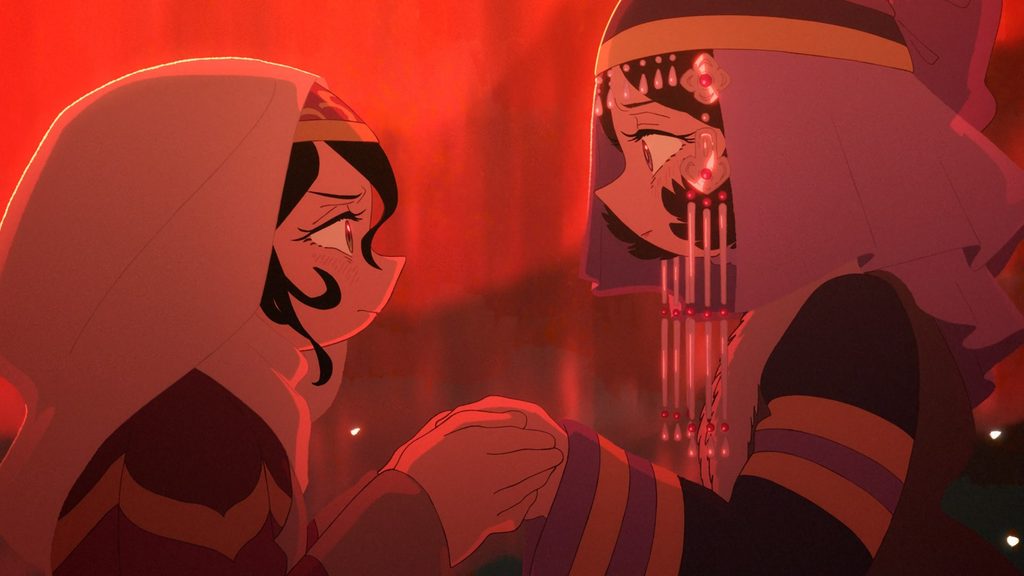
Her relationship with Töregene adds another compelling dimension, bringing two women with reasons to resent the empire into the same political environment. Their connection allows the series to explore how personal wounds inform political decisions. Anger can encourage solidarity, but neither woman can afford to ignore the circumstances surrounding the other.
The political relationships require attention, and the emphasis on study and conversation shapes the series’ pace overall. Its appeal depends on an interest in how people think and how their positions change. For me, that was rewarding. The drama remains absorbing because an apparently small decision can have consequences well beyond the person making it.
“Jaadugar” also strengthened a feeling I have had about Science SARU lately: Its consistently strong releases are earning it a place alongside Studio Trigger on my personal radar. I am increasingly interested in whatever the studio takes on next. Here, the expressive animation works so closely with the storytelling that my enthusiasm extends beyond simply admiring how the series looks.
What began as a discovery at Anime Expo became a series I was very glad to have found. “Jaadugar: A Witch in Mongolia” is thoughtful, visually fresh and emotionally involving. Its strongest achievement is giving Sitara a life worth following before asking us to confront what war takes from her.
Jaadugar: A Witch in Mongolia is currently streaming on Crunchyroll.
————
AnimeTV チェーン bringing you the latest anime news direct from Japan ~ anytime! — Your new source of information!