

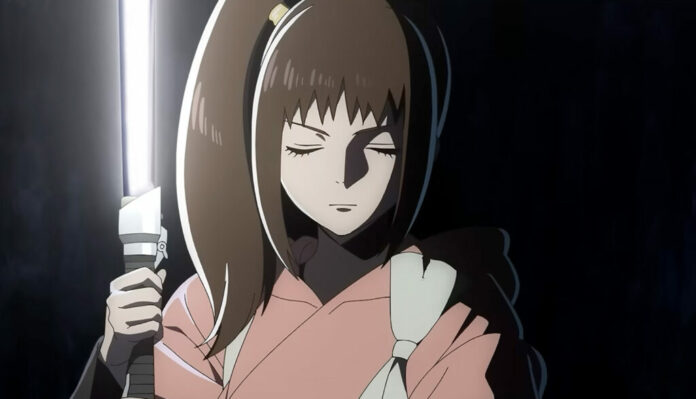
There is a moment midway through “Star Wars: Visions Presents — The Ninth Jedi” when a lightsaber ignites and the color is wrong.
Not wrong as in a continuity error. Wrong as in diagnostic. Wrong as in the blade has looked at the person holding it, taken a reading and delivered a verdict the character was not ready to hear. In eight episodes, Production I.G. does something Lucasfilm’s live-action output has spent a decade failing to manage: it makes the lightsaber mean something again.
The limited series, which dropped all eight episodes Aug. 5 on Disney+ and Hulu, is the first entry under the new “Visions Presents” banner and the first full-length Star Wars anime. It picks up after the “Visions” shorts “The Ninth Jedi” and “The Ninth Jedi: Child of Hope,” following Lah Kara (Chinatsu Akasaki in Japanese, Kimiko Glenn in English) as she trains under Margrave Juro and hunts for her missing father, the sabersmith Lah Zhima (Shin-ichiro Miki, Simu Liu), who is held by the warlord Nawaam (Nao Omori, Young Mazino).
Shunsuke Tada directs, Mitsuyasu Sakai writes and Kenji Kamiyama — the man who gave us “Ghost in the Shell: Stand Alone Complex” and the original “Ninth Jedi” short — supervises. That pedigree matters, and it shows up exactly where you would hope: in a series that would rather interrogate an ideology than blow up a base.
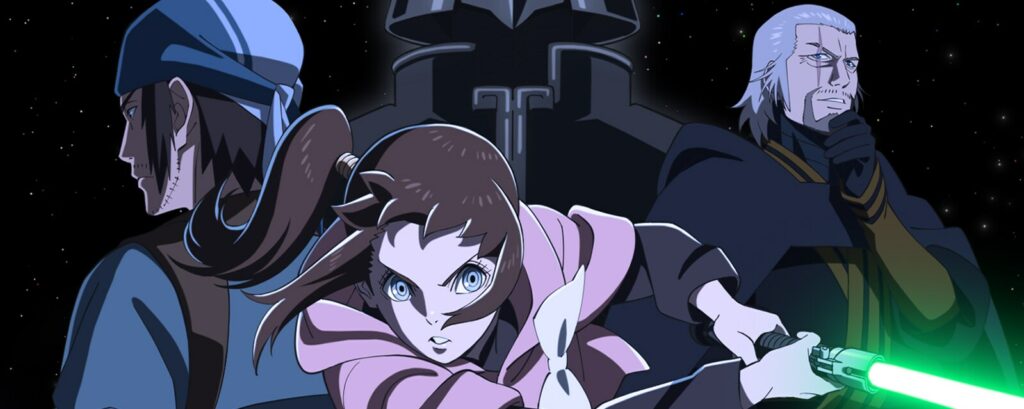
Start with the obvious, because it is genuinely spectacular. This is the best-animated Star Wars project ever produced, and it is not especially close.
Production I.G. builds a galaxy that does not look borrowed. The ships have weight and grease. The droids read as machines somebody had to repair rather than toys somebody had to sell. There is an entire subculture of subterranean miners who feel imported from high fantasy, and the show is confident enough not to explain them. The whole aesthetic sits somewhere between space western and workshop drama, and it is a relief — this is the rare Star Wars production that does not appear to be nervously checking the original trilogy for permission.
The duels are the payoff. Recent Star Wars swordplay has trended weightless, a series of poses connected by editing. Here, the fights have verticality, exhaustion and consequence. Blades get heavy. Characters get tired. And because every saber in this setting shifts color according to the wielder’s state of mind, the choreography doubles as a running psychological readout. You are not just watching two people fight. You are watching two people fail to keep their composure in real time, in color, in front of each other.
Nobuko Toda and Kazuma Jinnouchi’s score deserves its own paragraph. It is unmistakably Star Wars without lifting a single John Williams leitmotif — brass and scale where the franchise demands it, but built on percussion and negative space that feels closer to a Kamiyama production than to a Lucasfilm one. It is the sound of a franchise being handed to somebody new and coming back altered.
The first three episodes are the weakest, and it would be dishonest to pretend otherwise.
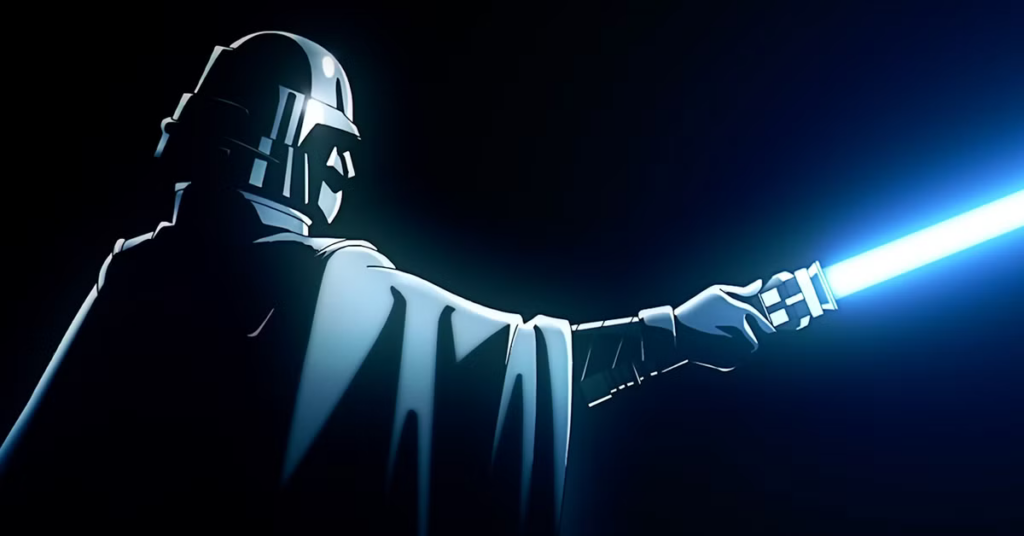
The early stretch is a competent runaround — planet, ally, ambush, escape, repeat — that leans on archetypes the franchise has been recycling since 1977. Wide-eyed apprentice. Weathered master. Warlord in dark armor with a planet-killer in his pocket. The series has been given a setting generations removed from the Skywalker Saga, a blank slate most writers would kill for, and it spends its opening act rearranging furniture that was already in the room.
Push through it. Around the fourth episode, the show stops being about a rescue and starts being about the two men on either end of it.
Zhima and Nawaam witnessed the same catastrophe and walked away with opposite conclusions. Zhima retreated into craft, building blades that expose the truth of whoever ignites them — a moral instrument made by a man who no longer trusts moral instincts, including his own. Nawaam concluded that righteousness is a story the strong tell afterward, and that peace is simply what you call a galaxy too frightened to keep fighting. His answer is detachment: strip away attachment, altruism and appetite alike, and what remains is clarity. And power.
What elevates this above the usual gray-Jedi hand-wringing is that the series lets Nawaam be legible. He is not wrong about the state of the galaxy. He is wrong about what to do with that state, and the show trusts its audience to hold both of those facts at once.
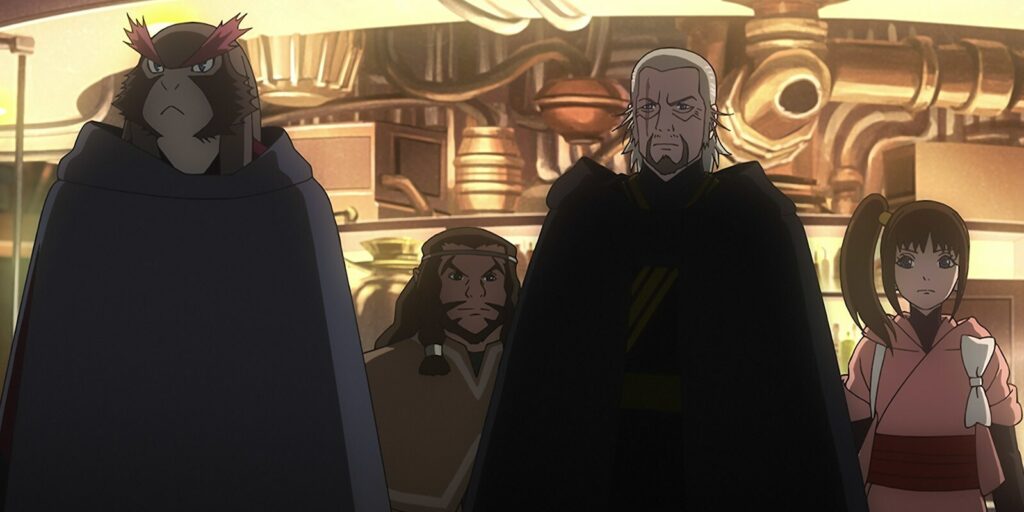
Kara is where it all lands, and Akasaki’s performance serves as the quiet spine of the season.
Kara’s slide toward darkness grows out of attrition. Again and again, she watches people die while carrying the knowledge that a little more strength might have saved them. Each loss wears down her capacity to feel until Nawaam’s promise of stillness begins to resemble mercy. Power tempts her by offering an escape from guilt, grief and responsibility. When she finally reaches the weightless state Nawaam has preached throughout the season, the series makes its strongest decision.
She puts it down. The gesture becomes a deliberate rejection of the emotional emptiness required to carry that power.
It is a genuinely radical ending for a franchise that has spent nearly 50 years treating mastery as a destination. “The Ninth Jedi” instead presents the Force as a mirror and enlightenment severed from compassion as a disciplined form of cruelty. The ninth blade may ultimately belong to someone with no measurable connection to the Force, expanding the meaning of a Jedi beyond talent or bloodline. Here, willingness carries the greatest weight.
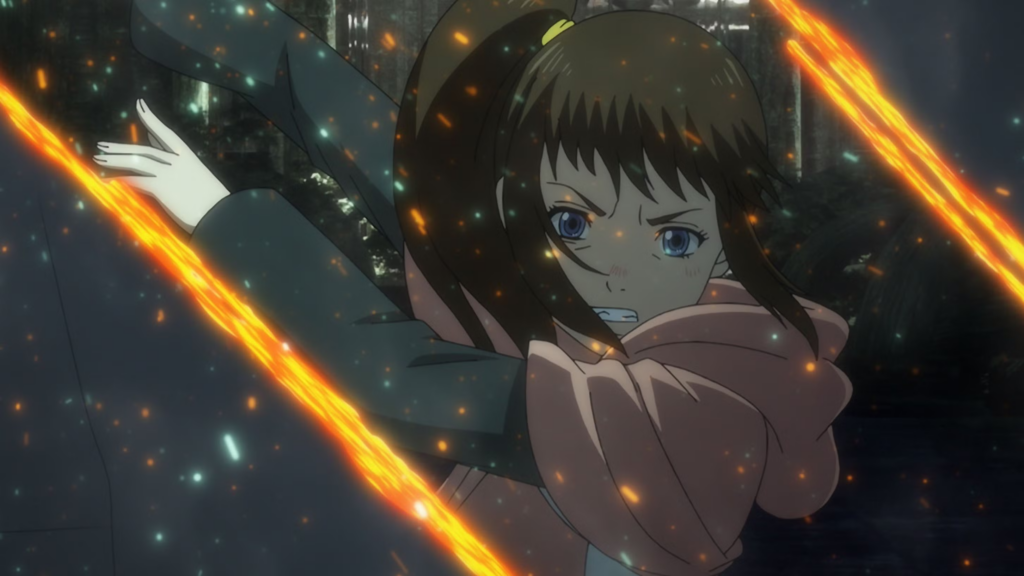
“The Ninth Jedi” is non-canon, which turns out to be the point. Freed from the Story Group’s continuity ledger, Tada and Sakai get to chase the ideas Lucasfilm keeps circling and flinching from, and Production I.G. gets to draw a galaxy nobody storyboarded in 1977.
It is a slow starter that becomes a genuinely great one. It is the strongest argument yet that the franchise’s future is in handing the keys to creators who did not grow up inside its mythology, and it is the kind of series that gets better every hour you spend thinking about it after the credits.
Watch the two “Visions” shorts first. Then watch this. Then go argue with somebody about the last 10 minutes, which is the highest compliment a Star Wars story has earned in a long time.
————
AnimeTV チェーン bringing you the latest anime news direct from Japan ~ anytime! — Your new source of information!