

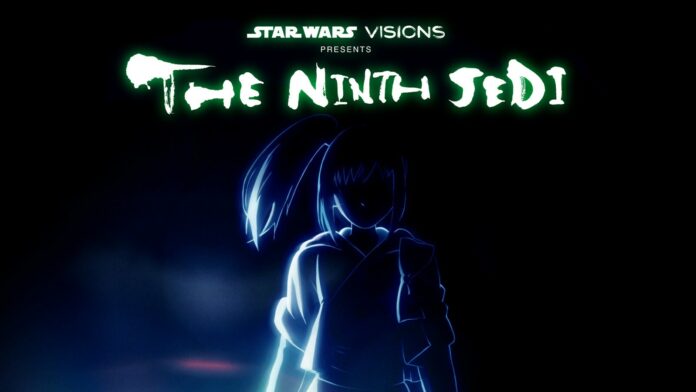
When “The Ninth Jedi” debuted in the first volume of “Star Wars: Visions” in 2021, supervising director Kenji Kamiyama already had more story than one short could hold.
The episode introduced a striking idea: a lightsaber whose blade changes color to reflect its wielder’s connection to the Force. But much of the history behind the weapon, its creator, Lah Zhima, and his daughter, Kara, remained unexplored.
“Even when we were making the short, we had developed a lot of background lore,” Kamiyama said. “I always thought that if I ever had the chance, I’d love to depict those elements. Getting that opportunity this time made me truly happy.”
Kara’s story continued in 2025 with “The Ninth Jedi: Child of Hope” in “Star Wars: Visions” Volume 3. It expanded again Aug. 5, when Lucasfilm and Production I.G released all eight episodes of “Star Wars: Visions Presents – The Ninth Jedi” on Disney+ and Hulu.
The limited series is the first project under the new “Visions Presents” banner, which allows filmmakers to extend stories from the anthology into longer-form productions. Shunsuke Tada directs the series, Mitsuyasu Sakai writes it and Kamiyama serves as supervising director.
Kamiyama, Tada and producer Hitoshi Ito responded to written questions from AnimeTV about what the longer format made possible, how their collaboration with Lucasfilm worked and what they hope “Star Wars” fans take away from anime as a medium.
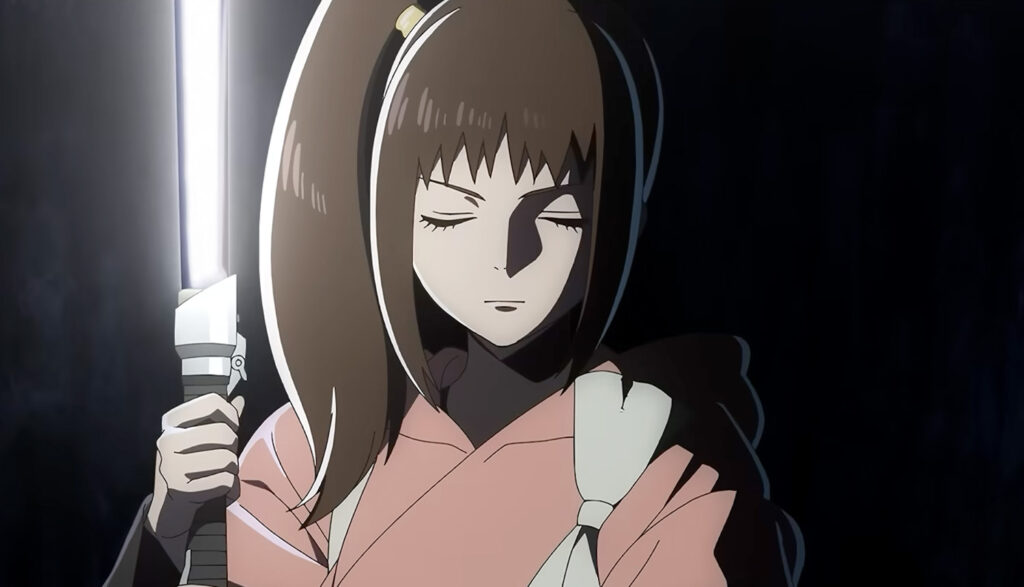
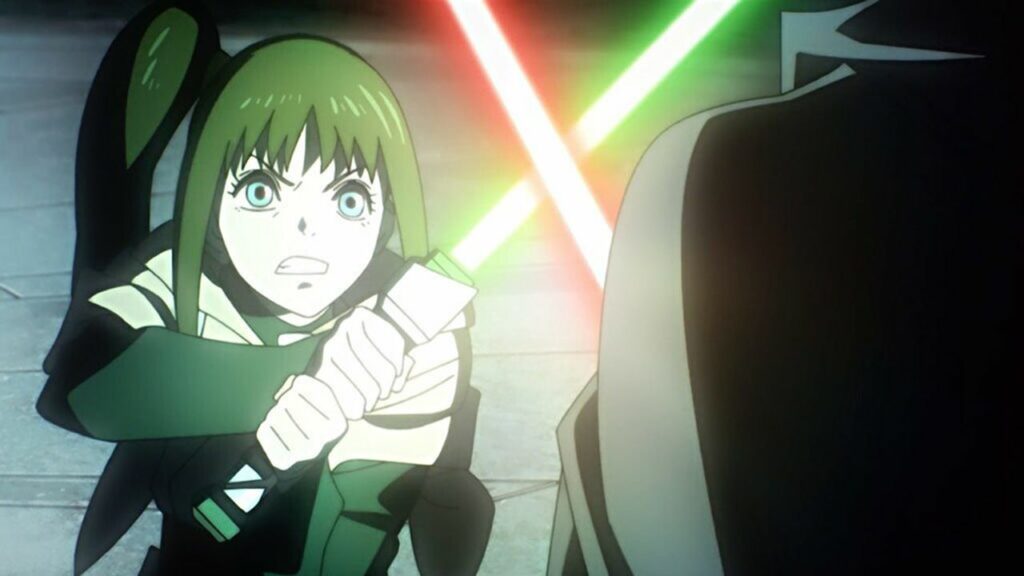
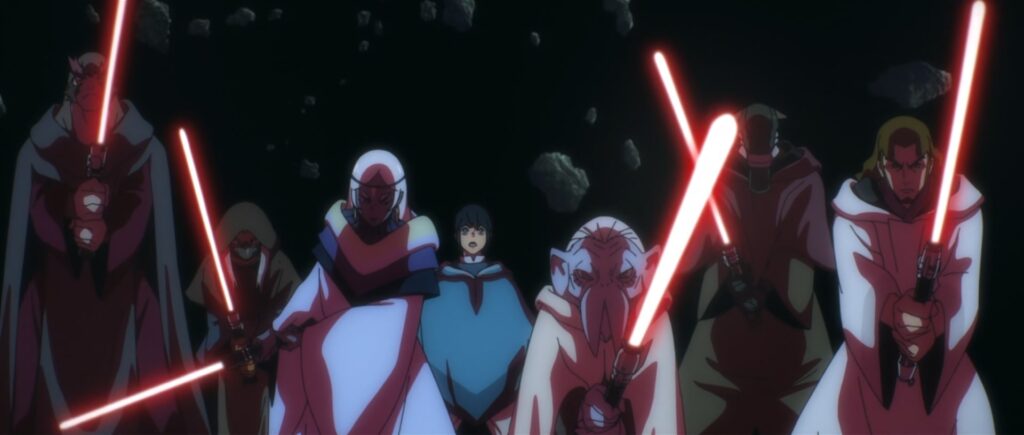
The original short centered on warriors who answered Margrave Juro’s call for Jedi, only for many of them to be revealed as Sith. The series presented a new challenge: assembling the group of nine at the heart of Kamiyama’s larger story.
“Since we needed to assemble a new group of nine, and we hadn’t designed all of them yet, rebuilding the narrative arc so that all nine gather across the episodes was the part we reconstructed from scratch for this series,” Kamiyama said.
Kamiyama said his own approach changed less than he expected. The larger shift came from entrusting the action direction to Tada.
“I essentially entrusted the action and lightsaber styles to his vision. I think Director Tada expanded those elements immensely,” Kamiyama said. “Because it’s a series, we can showcase longer action sequences and a rich variety of combat styles unique to each character.”
Hand-drawn by design
Kamiyama has worked across both hand-drawn animation and fully computer-generated productions, including projects with director Shinji Aramaki. For “The Ninth Jedi,” however, he said the creative direction was clear from the beginning.
“In the current Japanese anime industry environment, an animator’s motivation to draw a specific style of artwork is extremely crucial,” Kamiyama said.
He said the original short attracted Production I.G animators who were particularly skilled at character movement. Although the series uses computer-generated imagery in places, Kamiyama believed keeping it primarily hand-drawn “would bring out the narrative’s direction and final visual power overwhelmingly better.”
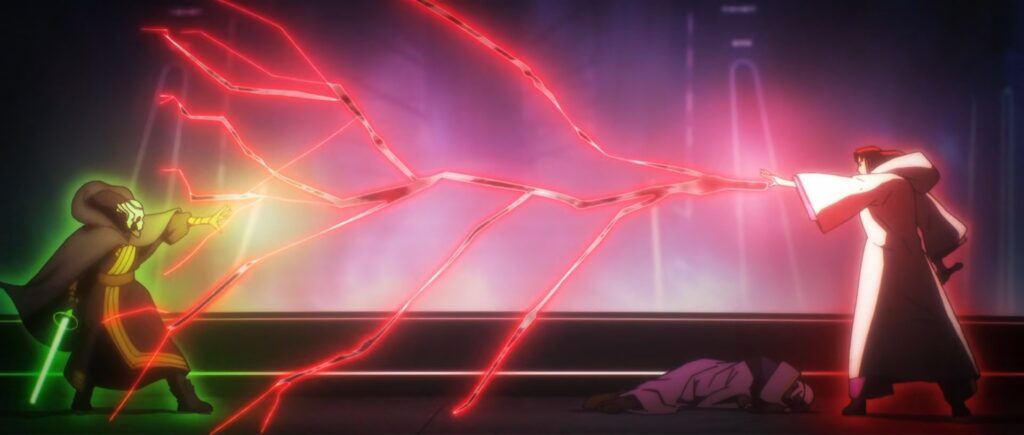
Tada’s career includes sports anime, the music-centered “Star-Myu” and the space opera “Legend of the Galactic Heroes: Die Neue These.” For “The Ninth Jedi,” however, the central challenge was not genre. It was Kara.
“My career mostly focused on male-led narratives. But here, Kara is the protagonist,” Tada said.
He was direct about why directing her represented new territory.
“People sometimes say, ‘Tada-san is great at male-centric shows,’ but it isn’t about preference or skill. It was honestly just my own shyness toward directing female protagonists,” Tada said.
Kamiyama’s work, Tada noted, has long featured female protagonists, including Motoko Kusanagi in “Ghost in the Shell,” Balsa in “Moribito: Guardian of the Spirit” and Héra in “The Lord of the Rings: The War of the Rohirrim.” Taking on Kara meant building that kind of lead himself.
Tada said Kara does not begin her journey with the goal of training. She wants to save her father, and the costs of that mission shape her growth as both a Jedi and a person.
“In terms of my career, that structure is very similar to directing sports anime, like a first-year recruit joining a club and eventually competing in the national tournament,” Tada said.
He said a similar structure guides Ethan, whose humanity develops throughout the series.
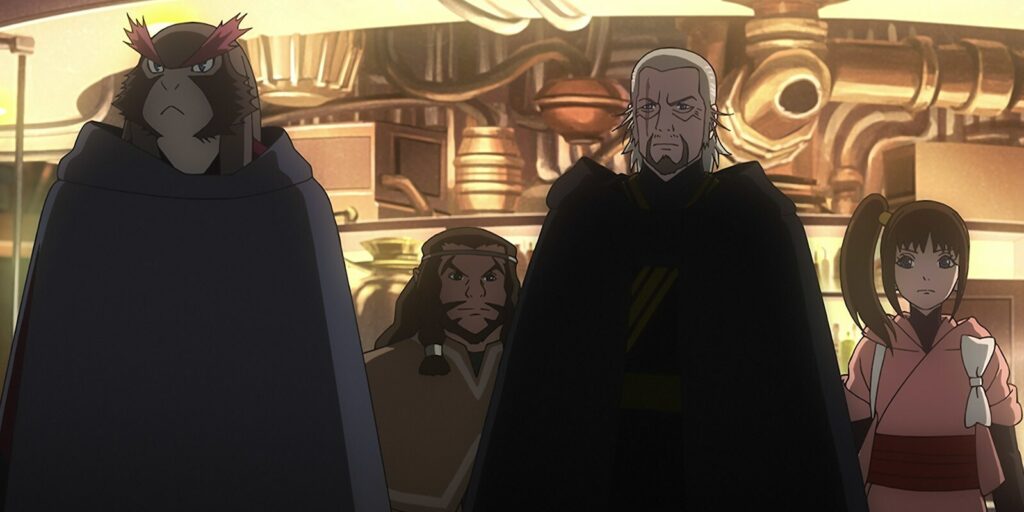
The color-changing lightsaber at the center of the story did not align with established rules governing the Force and the weapon. Kamiyama said Lucasfilm allowed the concept to stand because “Visions” stories exist outside official canon.
At first, working without familiar figures such as Darth Vader or Luke Skywalker felt isolating, Kamiyama said. He eventually came to view that distance as a creative freedom, one that allows viewers to connect new characters to familiar archetypes.
“If a man wearing a black helmet appears, audiences understand he plays a ‘Darth Vader-like‘ role. We decided to lean into that,” Kamiyama said.
Kamiyama also pushed for a different interpretation of the conflict between light and dark. He said the franchise’s strict dualism can make the Jedi appear rigid, “almost like the Sith are having all the fun (maybe I should not say that).”
To explain his approach, Kamiyama turned to Japanese history. He said a knight’s counterpart at the top of the samurai hierarchy would be a shogun, who functioned as both a statesman and a charismatic leader. Pointing to the franchise’s roots in jidaigeki, or Japanese period films, Kamiyama proposed bringing the Jedi closer to those influences. Lucasfilm embraced the idea, he said.
Ito, who has led Production I.G’s global co-productions since 2019, said the production process marked a departure from the studio’s previous international projects. Those collaborations, he said, typically began with either an American-developed script or a Japanese-led production that Western partners later reviewed.
“This time, however, both sides developed the project together from pre-production with mutual understanding and respect,” Ito said.
The team evaluated and incorporated Lucasfilm’s notes, Ito said. When Production I.G chose not to use a suggestion, its staff explained the creative intent until both sides reached an agreement. That process was possible, he said, because the original short had established trust and Lucasfilm retained the same core team.
Ito said launching the “Visions Presents” banner also carried the weight of expectations from Lucasfilm and fans, pressure he described as a form of “constraint.” Production I.G responded by strengthening the production structure around Kamiyama and adding Tada, Sakai and a larger animation team.
Viewers do not need to have seen the earlier shorts before starting the series, Ito said. The first episode opens with a narrated recap designed to evoke the franchise’s opening crawls. The shorts add context, but the viewing order is flexible.
“Even if viewers watch the series first and circle back to the shorts afterward, it works great,” Ito said.
For Kamiyama, the production also makes a broader case for animation. Animated characters begin from a more neutral visual baseline in terms of race and, to some extent, gender, he said. That flexibility allows the medium to cross expressive boundaries that live-action productions cannot.
“A screenwriter once told me, ‘Anime is how Japanese creators can direct western-style cinema,'” Kamiyama said. “Anime can break through visual and expressive barriers that live-action simply cannot. I think that’s why anime’s fanbase in America keeps growing every year.”
“Star Wars: Visions Presents – The Ninth Jedi” is streaming on Disney+ and Hulu.
————
AnimeTV チェーン bringing you the latest anime news direct from Japan ~ anytime! — Your new source of information!