

Halfway through every anime season, my watchlist begins to resemble a second job. New episodes pile up beside unfinished spring series, convention coverage and whatever older show the internet has collectively decided to rediscover that week. Summer 2026 reached that point quickly.
The pressure to keep pace can flatten the experience. Weekly discussion encourages speed, and social media turns each premiere into a brief public referendum. Viewers rush through an episode so they can join the conversation before spoilers travel across their feeds. A story becomes content to process on schedule.
Waiting offers another approach. Several episodes viewed together reveal patterns that a weekly schedule can scatter: a glance that gains meaning later, a political alliance that develops across chapters or a battle that carries the force of everything leading into it. Binge-watching can become a form of attention.
Summer 2026 makes a persuasive case for that patience. Its strongest anime span adult romance, historical drama, cyberpunk, dark fantasy and franchise finales. Their differences give the season its character, and their storytelling often benefits from room to gather momentum.
These are the 10 series I would save for a binge.
Smoking Behind the Supermarket with You
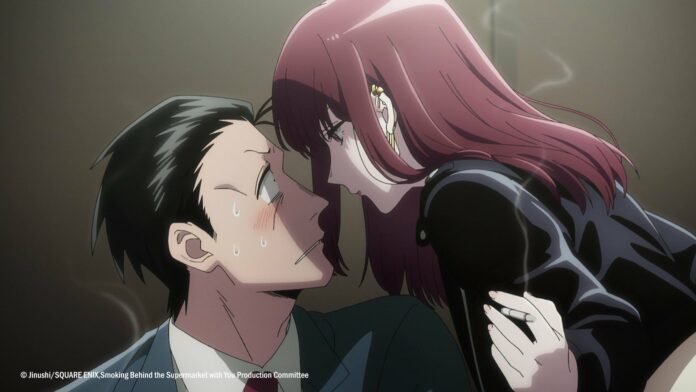
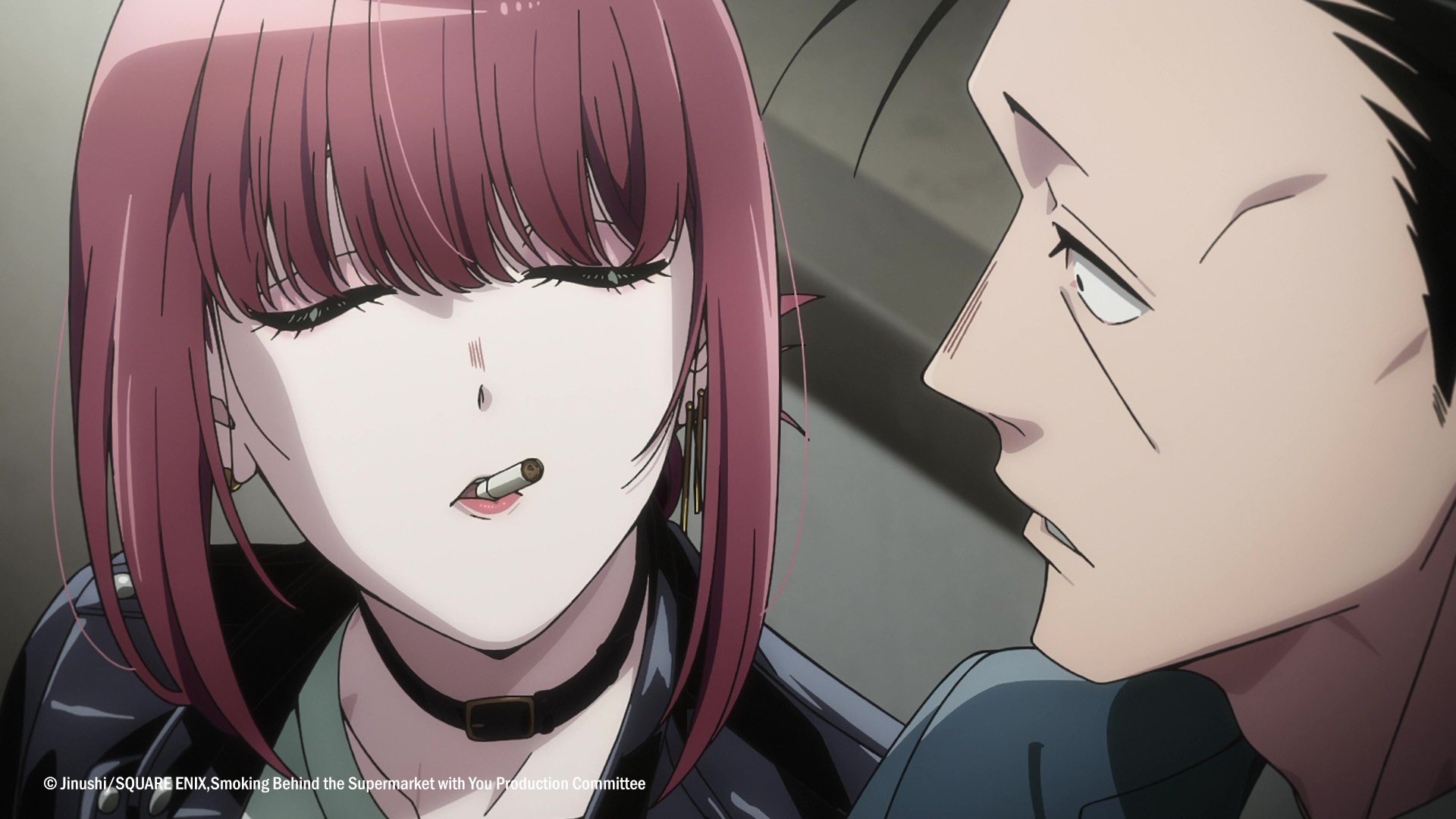
“Smoking Behind the Supermarket with You” has one of the summer’s smallest premises. Sasaki, an exhausted salaryman, visits a supermarket after work and takes comfort in the warmth of Yamada, a cheerful cashier. One evening, he meets the pierced and playful Tayama behind the store. She invites him to share a cigarette, and their smoke breaks become a routine.
Yamada and Tayama are the same woman, a fact that escapes Sasaki. The misunderstanding supplies the comedy. Adult exhaustion gives the series its emotional strength. Yamada maintains a polished customer-service persona inside the store. Tayama gives her space to tease, complain and breathe. Sasaki finds similar freedom during the few minutes they share behind the building.
Viewed together, those brief meetings begin to feel substantial. A borrowed lighter, an offhand joke and a moment of concern build a relationship through repetition. The series understands how affection can grow inside a routine before either person finds language for it.
The cigarette smoke defines the setting. Emotional rest gives the story its appeal. Sasaki and Tayama create a small refuge from jobs that demand constant performance. For viewers accustomed to romantic comedies about adolescent hesitation, their adult weariness carries a welcome specificity.
You and I Are Polar Opposites Season 2
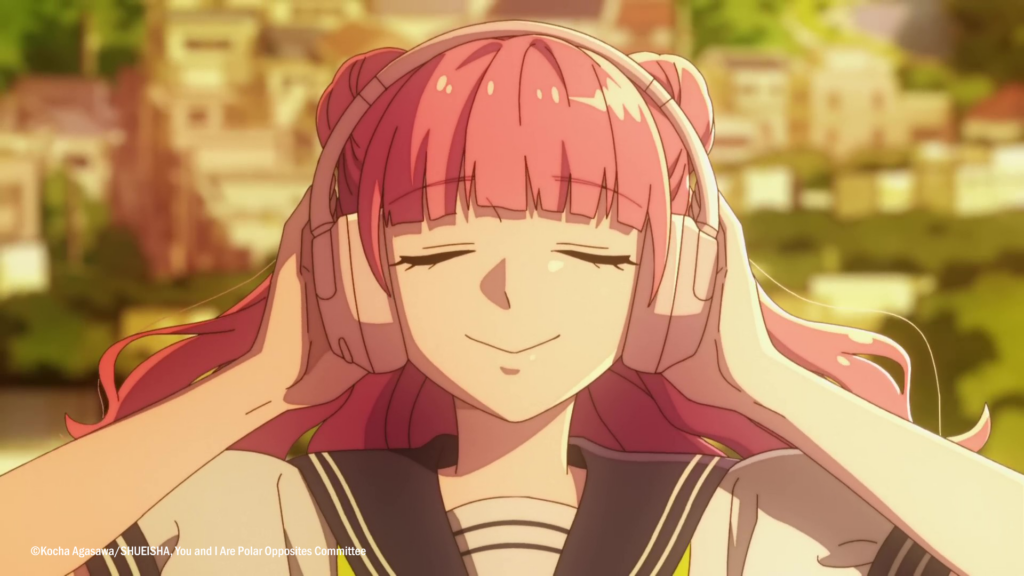
“You and I Are Polar Opposites” Season 2 offers a brighter companion piece. Suzuki and Tani remain the center of the story, and the surrounding cast receives equal emotional care. Friends develop crushes, misread signals and discover the courage required for honest conversation. Each relationship moves at its own pace.
The series treats communication as a skill. Its characters make mistakes, regroup and try again. Their sincerity gives the comedy warmth and allows romantic progress to emerge from recognizable choices. A binge makes the parallel development easier to appreciate because small changes in posture, confidence and language remain fresh in the viewer’s mind.
The first season provides essential groundwork and makes for an easy catch-up. Together, both seasons form one of anime’s most generous recent portrayals of young love.
I Want to Love You Till Your Dying Day
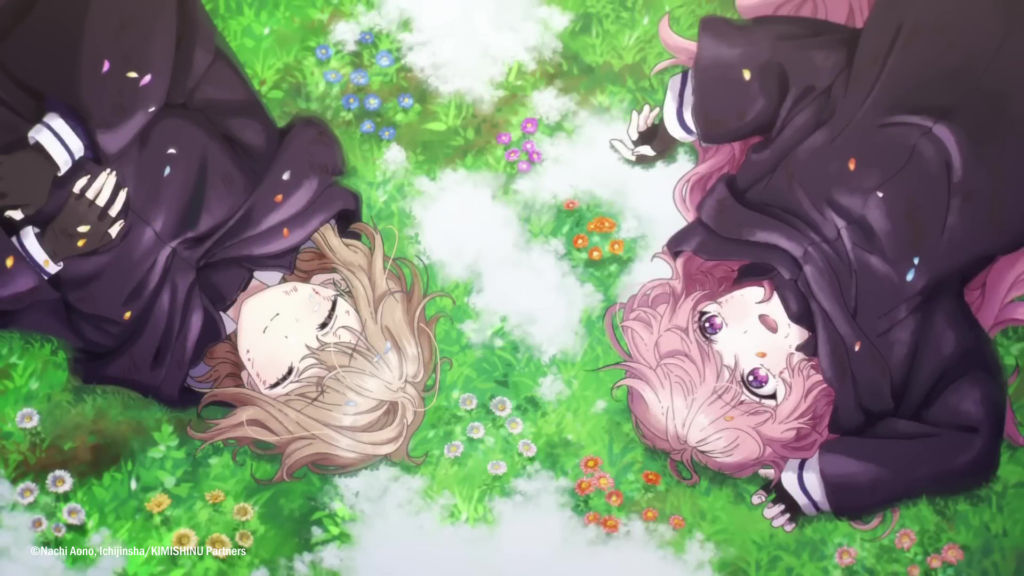
“I Want to Love You Till Your Dying Day” carries tenderness into a far harsher world. Sheena is a 14-year-old orphan raised at a secret academy that turns children into magical weapons. Death has become part of the curriculum. Grief receives little time before the next deployment.
Mimi returns from battle covered in blood and smiling through wounds that should be fatal. Rumors describe her as the academy’s immortal weapon. Once she becomes Sheena’s roommate, their growing bond gives both girls a private life inside an institution built around war.
The romance sharpens the tragedy. Domestic scenes create a sense of safety, and every battlefield threatens that fragile peace. Several episodes viewed in succession allow those moods to remain connected. A quiet morning carries the memory of the previous fight. A loss reaches forward into the next shared meal.
This series asks more from its audience than casual comfort viewing. Its beauty comes with dread, and the emotional impact builds steadily.
Jaadugar: A Witch in Mongolia
“Jaadugar: A Witch in Mongolia” deserves a larger place in the summer conversation. Set in the 13th century, the series follows Sitara, a Persian girl displaced by the Mongol Empire’s expansion. She loses her mother, is sold into slavery and eventually enters a household of scholars. Education gives her access to medicine, language and political power. Her path later intersects with Töregene, whose influence reaches deep into the empire.
Science Saru presents history as a network of human exchanges. Trade routes carry ideas alongside goods. Conquest moves languages, beliefs and medical knowledge across borders. Sitara learns that scholarship can save a life, influence a ruler or reshape an empire.
Her intelligence feels grounded in experience. Grief fuels her anger, survival strengthens her attention and study expands the scale of her ambition. The series gives her room to absorb information and decide how she will use it.
Binge-watching helps preserve the connections among names, regions and political interests. It also strengthens Sitara’s growth. Lessons introduced early return with consequences, and conversations that initially seem minor become part of a much larger struggle over knowledge and authority.
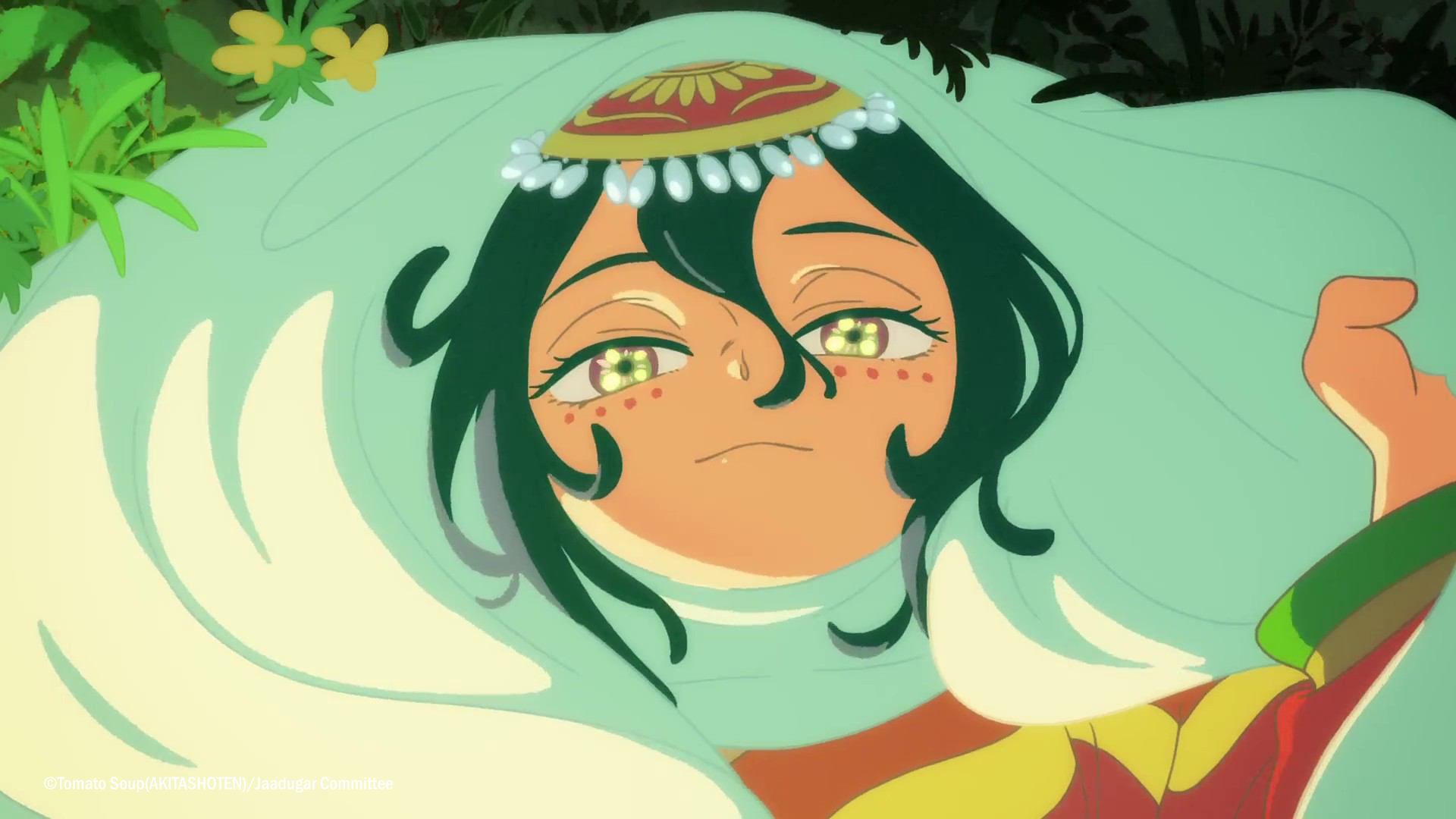
The World Is Dancing
“The World Is Dancing” explores history through artistic creation. Its protagonist, Oniyasha, will become Zeami Motokiyo, a foundational figure in the development of Noh theater. The series begins before that legacy, with a young performer searching for a form of movement capable of expressing the rhythm he senses in daily life.
The anime gives tremendous importance to physical detail. A hand position, a chant or the timing of a step can transform a performance. Oniyasha watches workers, aristocrats and fellow artists, then carries their movements into his own evolving practice.
His development emerges through repetition, rivalry, patronage and collaboration. Art appears as labor shared across a community. Several episodes together create the feeling of spending time inside that process, where each rehearsal adds another layer to an emerging tradition.
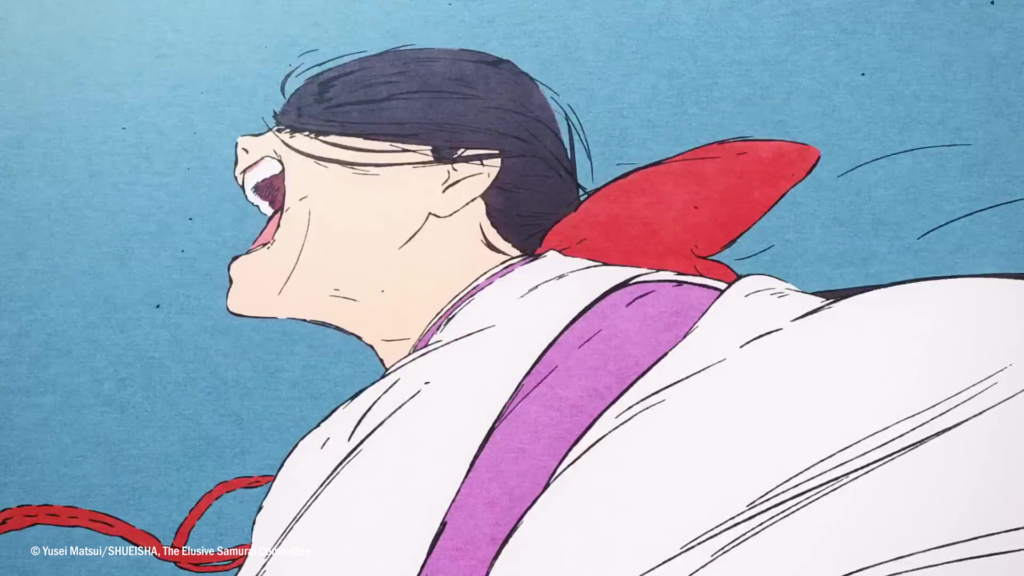
The Elusive Samurai Season 2
“The Elusive Samurai” Season 2 brings a more kinetic form of historical storytelling. Hojo Tokiyuki continues gathering allies and pursuing the restoration of his family’s power. His defining talent is evasion, and the anime turns escape into an expressive martial art. He twists through danger with a joy that gives the action its unusual pulse.
The series moves between broad comedy, stylized violence and political tragedy. Tokiyuki’s youth binds those tones together. He and his retainers play, argue and celebrate inside a world shaped by massacre and betrayal. Their energy gives survival emotional meaning.
Season 1 supplies the necessary alliances and history. A continuous viewing schedule also keeps the political map clear as new factions enter the conflict.
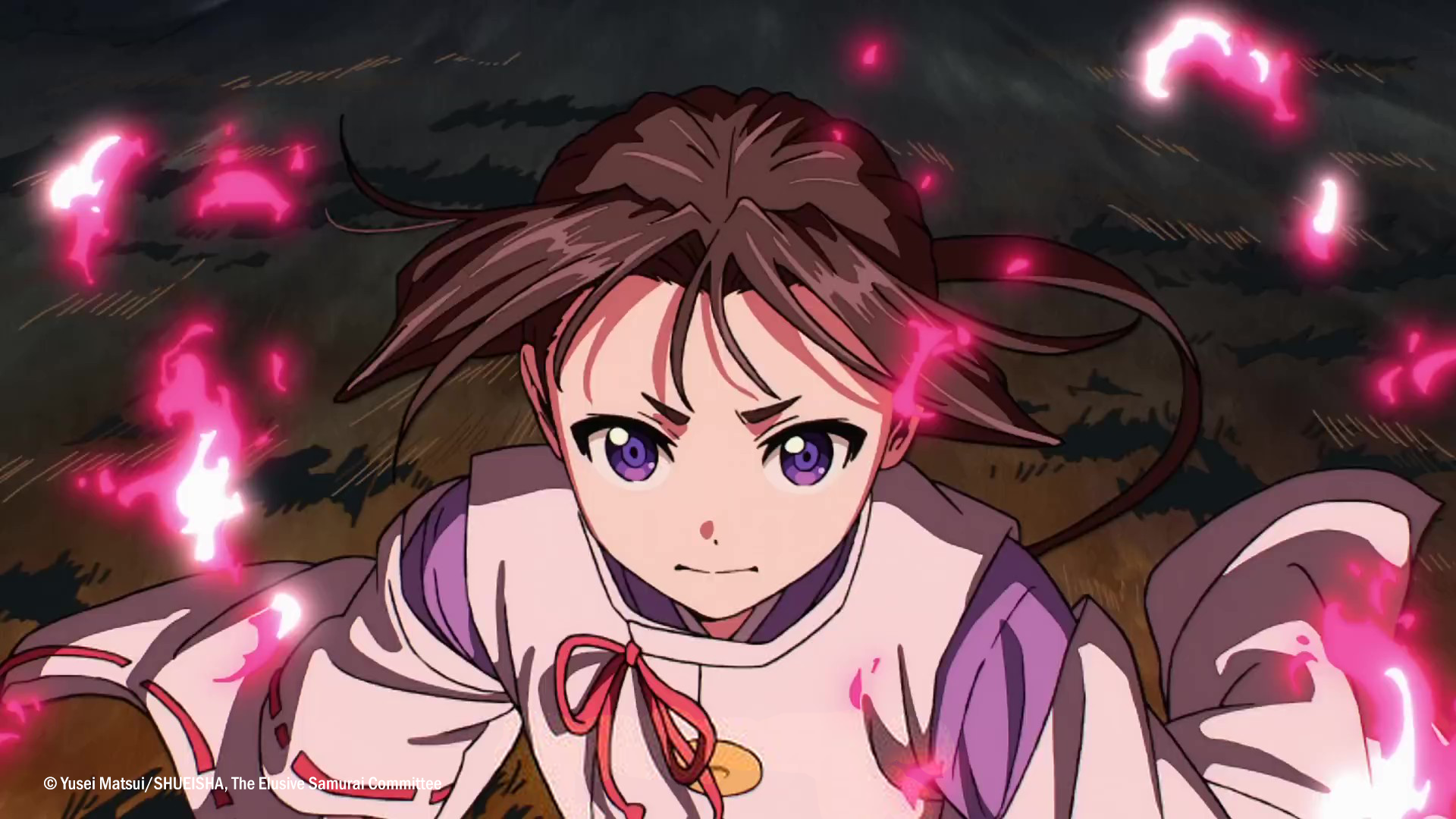
Saga of Tanya the Evil II
“Saga of Tanya the Evil II” approaches history through an alternate world of magical warfare and military bureaucracy. Tanya Degurechaff seeks safety far from the front, and her extraordinary competence repeatedly earns her greater responsibility. Each successful operation pulls her deeper into the war.
The series finds dark humor in that cycle. Tanya can calculate supply needs, troop movements and institutional incentives. Faith, nationalism and Being X remain forces beyond her control. Her campaign becomes a struggle against the systems she understands and the cosmic power she cannot manage.
The first season and 2019 film provide required context. Returning viewers will find a sequel with the same appetite for aerial combat, strategic detail and theological hostility.
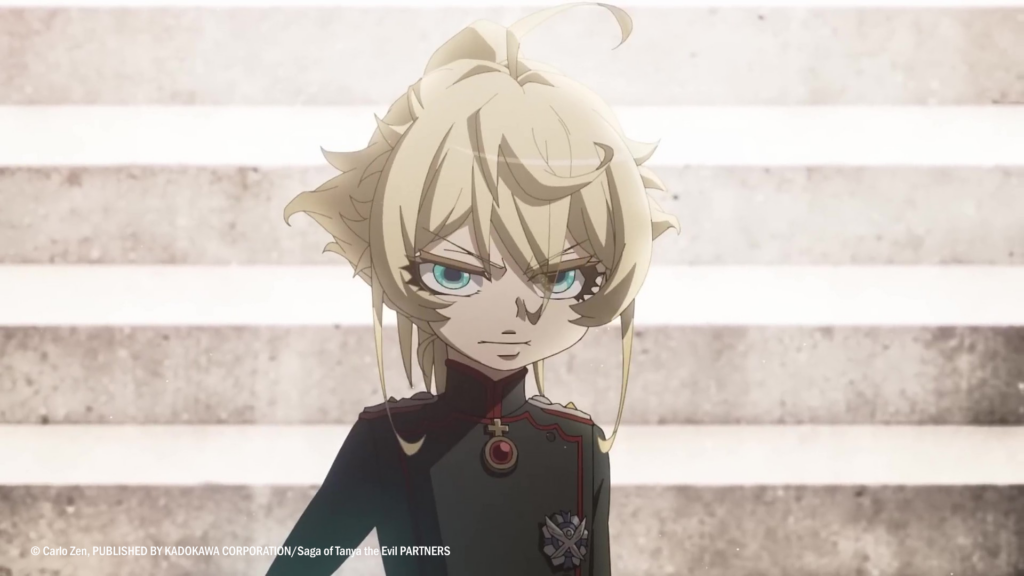
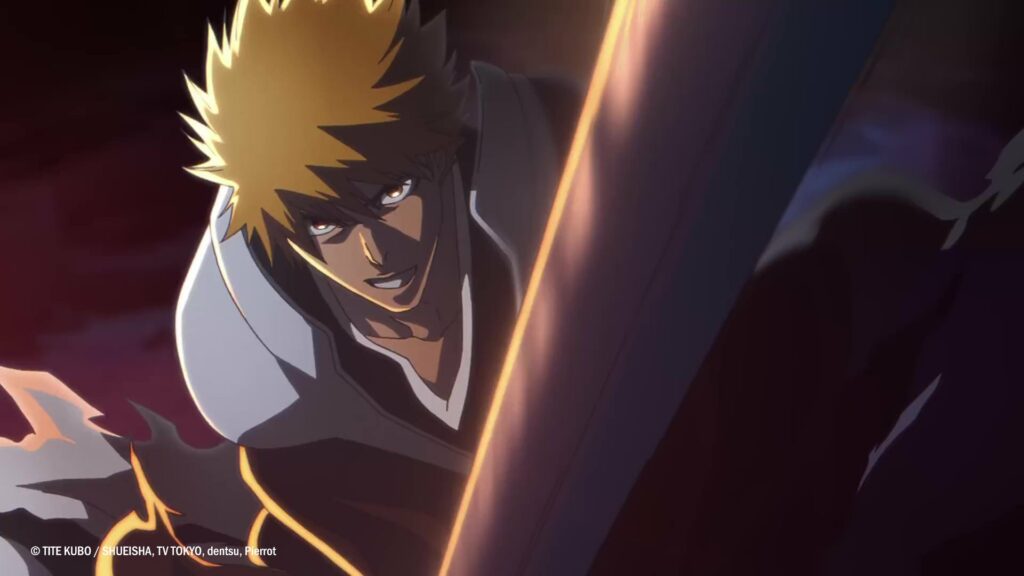
Bleach: Thousand-Year Blood War – The Calamity
“Bleach: Thousand-Year Blood War – The Calamity” arrives with more than two decades of audience investment behind it. The fourth and final part brings the Soul Reapers’ war with the Quincy toward its conclusion. The Royal Palace has fallen, the boundaries holding several worlds together are in danger and nearly every surviving character carries unfinished business into the final battles.
The revived adaptation has given Tite Kubo’s concluding arc the scale it deserves. Color, music and negative space shape the drama as strongly as sword fights. A character entrance can hold the screen for a breath and make the explosion that follows feel enormous.
“The Calamity” belongs to viewers who have traveled with Ichigo Kurosaki across the full series. That history is the source of its power. Once the final part finishes airing, a binge should allow its confrontations, revelations and farewells to land as one sustained closing movement.
Star Wars: Visions Presents – The Ninth Jedi
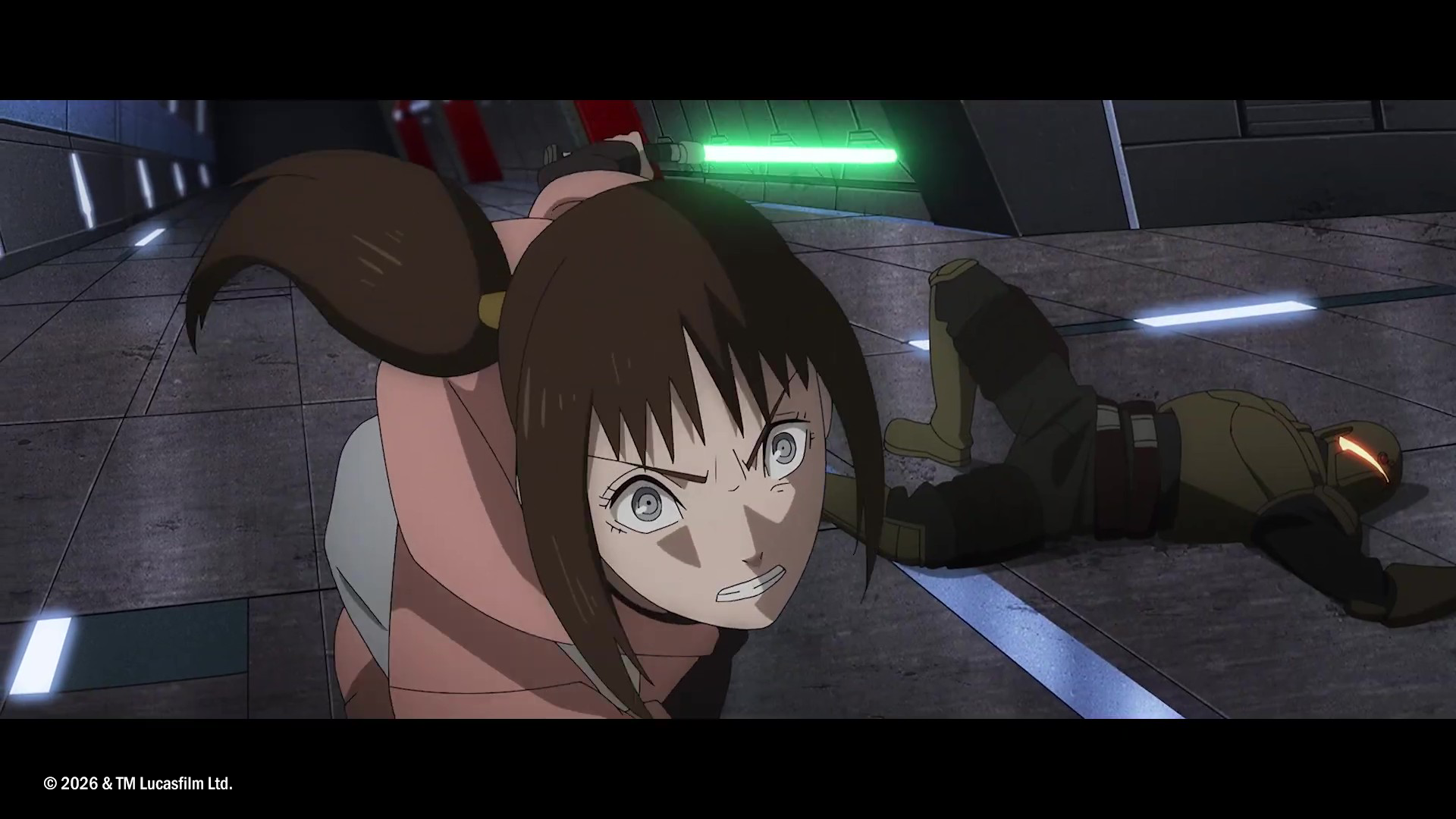
“Star Wars: Visions Presents – The Ninth Jedi” already offers that experience. All eight episodes arrived together on Disney+ and Hulu, turning Production I.G’s celebrated “Visions” short into a full limited series.
Lah Kara trains under Margrave Juro, travels with a small group of Jedi hopefuls and searches for her missing father, the sabersmith Lah Zhima. The story continues ideas introduced in “The Ninth Jedi” from the first volume of “Star Wars: Visions” and “The Ninth Jedi: Child of Hope” from Volume 3.
Lightsabers that reflect something about their wielders remain the project’s defining concept. The series uses that idea to explore identity, trust and Kara’s evolving relationship with the Force. Production I.G gives familiar “Star Wars” imagery a fresh cultural and visual vocabulary, opening space for a story beyond the saga’s central bloodlines.
The limited series can stand as an entry point. The two connected shorts add valuable history and require little extra time.
THE GHOST IN THE SHELL
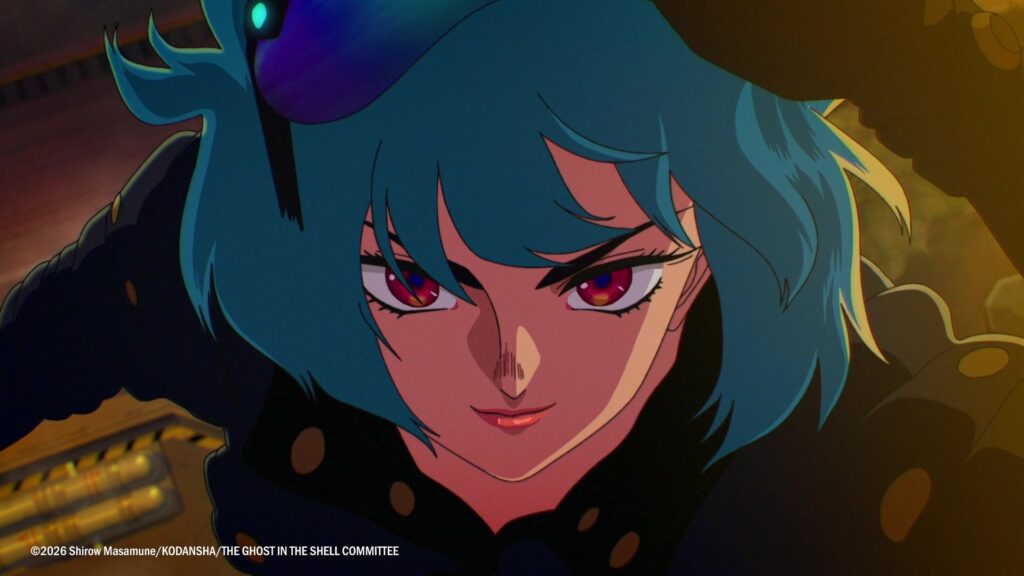
Science Saru’s “THE GHOST IN THE SHELL” completes the season’s major science-fiction offerings. This adaptation draws from Masamune Shirow’s original manga and restores much of its energy, humor and visual personality. Major Motoko Kusanagi leads Public Security Section 9 through cybercrime, political conspiracy and questions about consciousness in a world where technology has entered every layer of ordinary life.
The investigative structure fits a binge especially well. Individual cases deliver their own resolutions, and recurring ideas about surveillance, bodily autonomy and state power echo across the season. Science Saru treats the franchise’s history as a creative foundation and gives its future a lively, inhabited quality.
New viewers can enter through this version. Each case teaches the audience how its world works, and the larger questions grow naturally from the people living inside it.
Anime culture often rewards immediacy. Fans celebrate premieres together, build theories between episodes and turn a strong scene into a shared event within minutes. That weekly ritual has real value.
Binge-watching offers a different form of engagement, one shaped by continuity and immersion. Summer 2026 has produced an unusually strong group of series for that approach. “Smoking Behind the Supermarket with You” gains warmth as its routines accumulate. “Jaadugar: A Witch in Mongolia” and “The World Is Dancing” reward close attention to history and process. “I Want to Love You Till Your Dying Day” builds intimacy and dread across connected episodes. “Bleach” gathers decades of investment for one final movement.
The season has room for all of them. Its strongest anime carry distinct voices, and waiting gives those voices time to unfold at their own pace.
Sometimes the best way to keep up with a season is to let it run ahead.
————
AnimeTV チェーン bringing you the latest anime news direct from Japan ~ anytime! — Your new source of information