

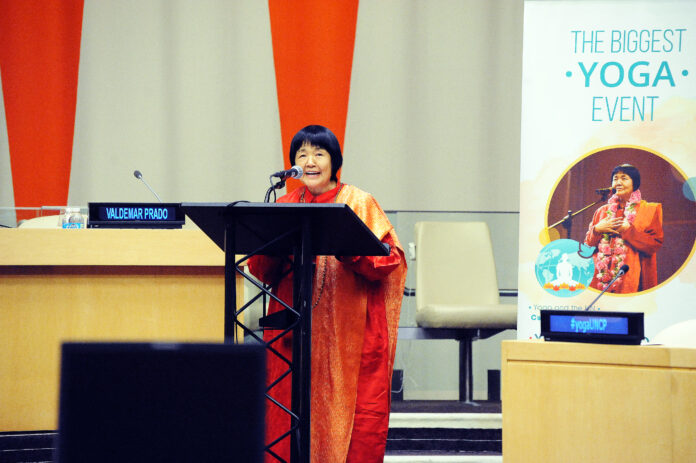
Today, we are presenting an article that is a little different from our usual content. We had the privilege of meeting renowned yoga and meditation master Yogmata Keiko Aikawa, who graciously shared her time with us to discuss her journey and her thoughts on the cultural differences between France and Japan.
AnimeTV: Dear Yogmata Keiko Aikawa, could you introduce yourself and tell us more about your teachings?
My name is Yogmata Keiko Aikawa. I teach deep meditation and the path toward spiritual awakening. I traveled to the Himalayas to practice an ultimate form of meditation known as samadhi, a profound state of consciousness and inner unity. Through years of dedicated practice, I attained what is known as the ultimate samadhi.
According to these teachings, human beings are composed of body, mind, and soul. We naturally observe the external world—the plants, animals, the sun, the moon, and the universe itself—and many people seek to understand the meaning of existence through what surrounds them. However, Himalayan traditions, which have been passed down for more than 5,000 years, teach us that we must also turn inward to discover the truth: to understand what we are made of, where we come from, and the creative source that animates our lives.

By deeply observing both body and mind, we can transcend their limitations and even move beyond the fear of death. The human body is not merely physical matter; it is also made up of vibrations and frequencies.
In this tradition, human beings are composed of the five elements: earth, water, fire, air, and space. Light and sound are also considered essential forces that contribute to our balance and well-being.
Meditation helps dissolve the burdens we carry within ourselves. Himalayan teachings contain numerous practices and techniques—some traditionally regarded as secret—that gradually purify both body and mind. Yet one element remains fundamental: the transmission or blessing of a spiritual master, which helps reconnect us with our original source.
As this process of purification unfolds, everything becomes clearer and purer, almost like an alchemical transformation.
Karma simply means action and the consequences that follow. Everything we experience leaves an imprint within us. Our habits, emotions, and suffering can accumulate over time: habits of anger, sadness, irritation, fatigue, or repetitive thought patterns.
That is why it is important to refresh both body and mind every day.
In the Himalayan tradition, this inner journey is also a quest to preserve our vital energy, remain inwardly youthful, move from darkness to light, from ignorance to awareness, and symbolically from mortality toward a form of spiritual eternity.
The path to awakening is ultimately about becoming a more complete version of ourselves.
We all seek to develop our talents—whether we are artists, singers, writers, painters, engineers, or professionals in any field. Yet when we constantly push our minds and bodies, stress accumulates and drains our energy. We need ways to regenerate ourselves.
Just as we cleanse our bodies, we must also cleanse our minds: release tension, purify ourselves, and regain inner clarity.
According to yogic philosophy, three fundamental energies coexist within us: Tamas (inertia and heaviness), Rajas (activity and restlessness), and Sattva (harmony and inner peace). These energies interact continuously, and when stress becomes excessive, we may experience greater heaviness, confusion, or inner darkness.
Regular meditation helps us feel lighter, more open, and more peaceful. It cultivates intuition, love, and compassion—not an ego-centered love, but a universal and unconditional one.
Gradually, a profound sense of peace emerges. This peace opens the mind, encourages brighter thoughts, and allows us to recharge our inner energy rather than constantly depleting it.
You are currently visiting France. In your opinion, what distinguishes the French from the Japanese when it comes to meditation?
I find French people very adorable—very kawaii, as we would say in Japan.
Last month, many young people and influencers came to meet me. In Japan, my students are generally much older, so seeing so many young people interested in meditation gave me great hope for the next generation. I find it truly encouraging to see young people eager to learn and explore meditation. Learning to meditate is something wonderful.
I also feel there is a special connection between France and Japan, particularly through manga culture. Japanese people love manga, and French people are equally passionate about it. Many enjoy storytelling, especially romantic stories, and anime is also incredibly popular.
I have the impression that French people may have a more natural or open relationship with love than Japanese people. Perhaps that is something rooted in culture.
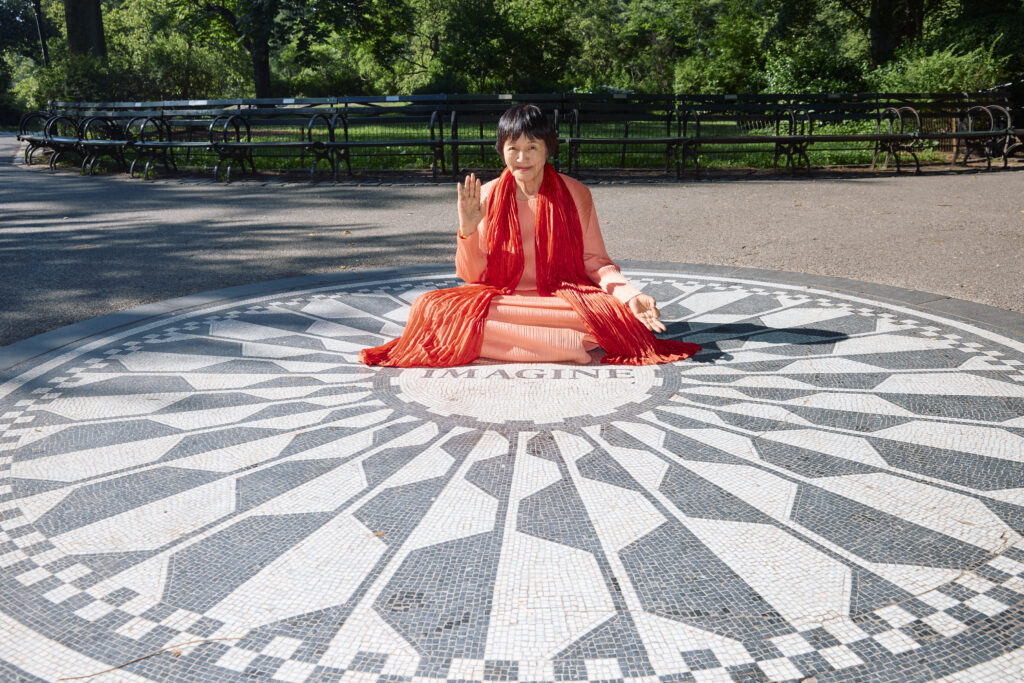
Speaking of manga, what connection can be made between manga and meditation?
Manga and fiction can be simple and effective ways of understanding certain spiritual concepts because they spark curiosity and make ideas more accessible.
However, what I teach is above all a practical discipline that can be applied to everyday life. The more consistently we practice, the closer we can come to the inner state of the Himalayan sages. Ultimate samadhi is not merely an idea or a concept—it is something that must be experienced day after day.
It is not enough to read books or reflect on spiritual theories. Spirituality is not simply an intellectual exercise. The real question is: how do we transform ourselves in our daily lives?
That practical transformation is what I teach. According to this philosophy, every person possesses immense potential: the ability to move closer to their true nature, reveal their talents, develop wisdom, and evolve toward a higher version of themselves—almost like a saint or an awakened being. That possibility exists within all of us.
Manga remains a representation, an image, a source of inspiration. What truly matters is the concrete transformation that takes place every day. It is not enough to dream. Dreams have their own beauty—and in a way, manga are beautiful dreams—but genuine inner work must be lived and practiced daily.
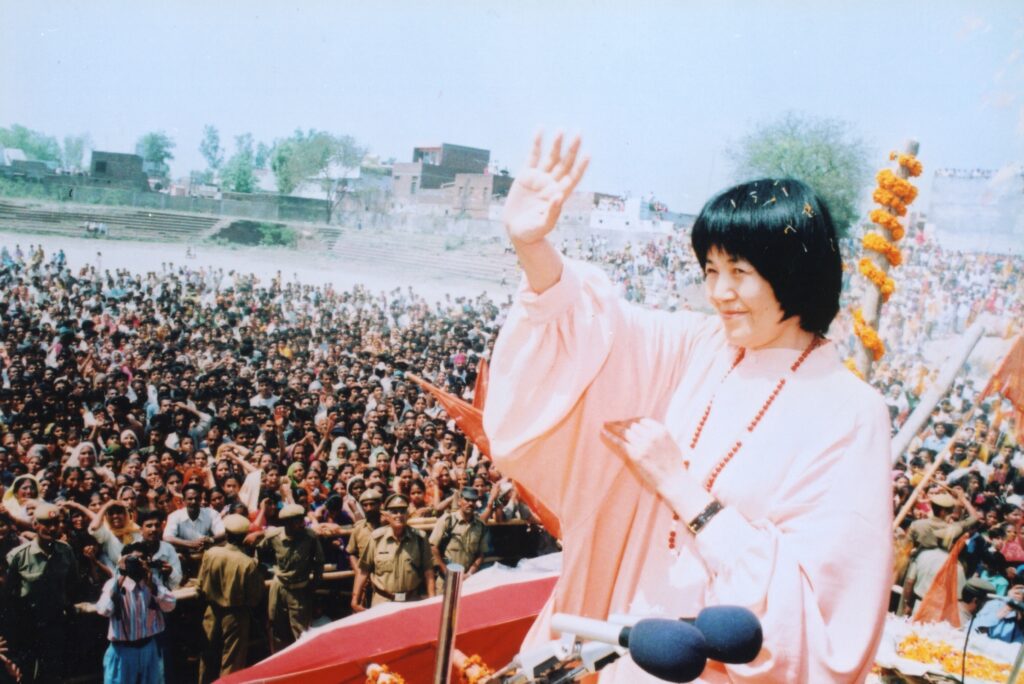
A manga may portray extraordinary individuals, discuss chakras, ki, or spirituality, but what matters most is lived experience: purification, inner transformation, and the gradual evolution of our personality and consciousness.
When I teach or guide someone directly, people sometimes experience something tangible—an energy, a presence. It is a living experience that differs from an imagined representation. Manga primarily reflects the imagination of its creator, who may not have personally walked a spiritual path.
As for me, I never really had the opportunity to read manga. During my youth, they were not as widespread or accessible as they are today. I am now 81 years old, and the world of manga has become much more accessible. If some people discover the story of Buddha or develop an interest in spirituality through manga, that makes me very happy.
Manga can be a wonderful gateway. They make certain ideas easier to understand and can serve as a meaningful first step on one’s spiritual journey.
We would like to extend our heartfelt thanks to Yogmata Keiko Aikawa for sharing her time and experience with us. It was an inspiring encounter that encourages us to look more closely at ourselves, our inner balance, and the importance of well-being—a journey that often begins with small changes practiced day after day.
————
AnimeTV チェーン bringing you the latest anime news direct from Japan ~ anytime! — Your new source of information!